
The Descent: What It’s Like Traveling Nearly 7,000 Ft. Underground
Most people will never go this deep underground. That is what makes the trip down No. 10 Shaft at Resolution Copper worth showing.
From the surface, 7,000 ft. is hard to picture. It is just a number until you walk toward the shaft, pass beneath the headframe and reach the collar, where the scale starts to come into focus. The opening drops below, surrounded by steel, hoisting equipment and the systems that move people safely between the surface and the underground workings.
Then you step through the collar and into the cage.
The doors close, the hoist communication bells ring, the hoist engages and the descent begins down No. 10 Shaft, the deepest single-lift mine shaft in the United States at 6,943 feet. The shaft is about 28 feet in diameter, and its two-level cage can carry up to 24 people at a time.
With personnel speeds limited to a maximum of 500 feet per minute, the trip takes about 15 minutes. At first, it can feel a little like an elevator. That feeling fades quickly as daylight disappears, the air grows more humid, and the sounds of the surface give way to the mechanical rhythm of the hoist and ventilation systems.
By the time the cage slows, and the doors open at the working level.
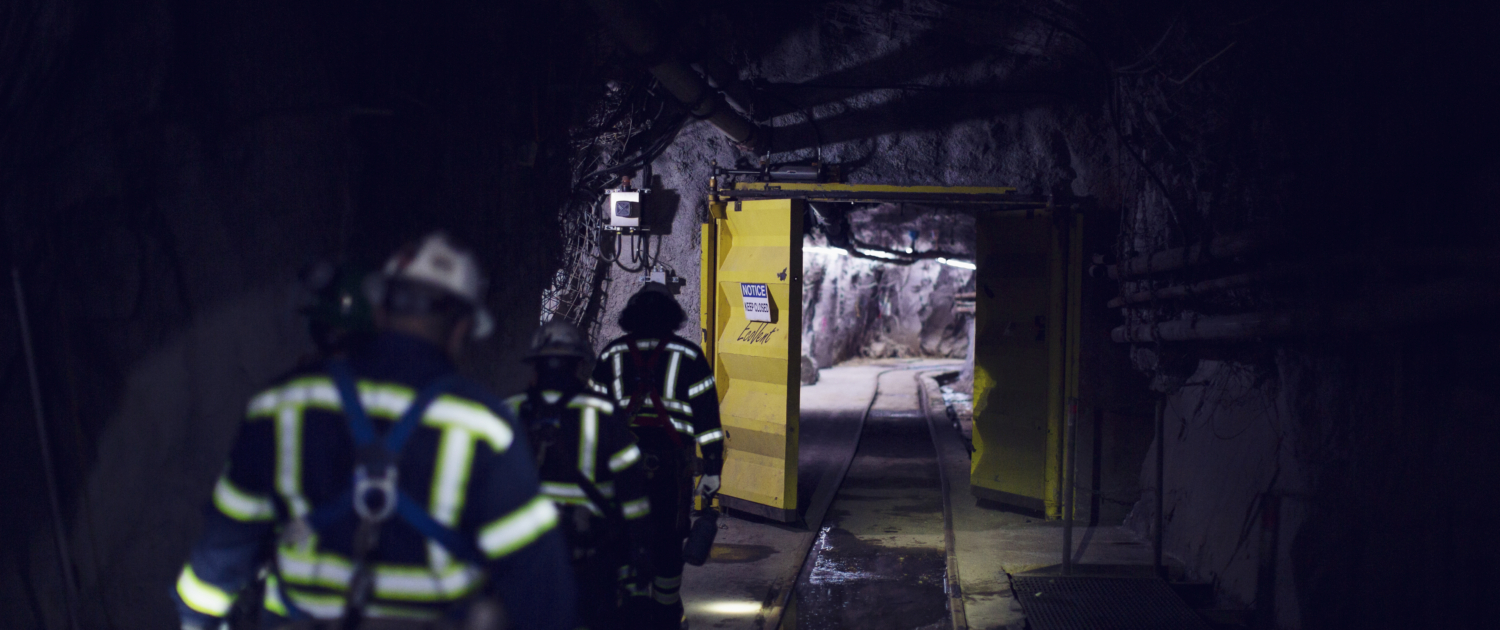
Stepping off the cage, it does not feel like entering a cavern. It feels like walking into an industrial workplace built deep underground. Tunnels extend away from the shaft into the surrounding rock. Overhead and along the walls are ventilation lines, piping, power and communications systems. Farther into the workings, crews are developing a new mine station, truck and drill bays, maintenance areas and other supporting infrastructure.
For the crews who work here, all of that becomes part of the everyday surroundings. For someone seeing it for the first time, the scale is difficult to ignore. Nearly 7,000 ft. below the surface, the workplace still needs many of the same essentials as one above ground: air, power, water management, communications and room for miners and equipment to move.
But there is one thing you cannot forget for long: the depth.
Near the bottom of the shaft, rock and water temperatures are hot. Ventilation and cooling systems keep the working areas in the 70s and 80s, moving fresh air through the tunnels and helping manage the heat underground.
So why go this far underground?
Because that is where the ore body is.
The Resolution Copper deposit lies roughly 5,000 to 7,000 feet below the surface and contains an estimated resource of 1.787 billion metric tonnes at an average grade of about 1.5% copper, making it one of the largest undeveloped copper resources in the world.
Its scale is only part of the challenge. The ore body sits within a complex geological environment shaped by multiple rock types, intense alteration, tectonic activity and hot groundwater. That complexity is one reason understanding the geology at this depth matters so much. Crews are building a more detailed picture of how the deposit changes underground as the project continues to be studied and developed.
Reaching it requires shafts, underground infrastructure, engineering and miners working at this depth. Today, exploration and development around the 6,800-foot level is helping crews learn more about the resource while building the infrastructure needed to access it.
That is what the descent puts into perspective. Nearly 7,000 feet below the Arizona desert, people are working every day in an underground environment built to support the exploration and development of a resource most people will never see.
For them, the journey down is not the story’s ending.
It is how the workday starts. What we do underground is for everyone above it.
Learn More: